Service Desk Triage and Routing
Every ticket classified, prioritised and routed to the right queue at the moment it arrives, with the duplicates and the known issues recognised before anyone opens them.
Typical outcomes for this kind of engagement. Results depend on your data and starting point.
Tickets arrive by email, portal and chat, described in the words of whoever raised them. A person reads each one, guesses the category, sets a priority and sends it to a queue. Misrouted tickets bounce between teams while the clock runs against the service level, duplicates of the same incident are worked separately, and the categories in the reports reflect the guesses rather than the work.
- Tickets described in the raiser's words, categorised by a human guess
- Misroutes bouncing between teams while the service level clock runs
- Duplicates of one incident worked separately by different agents
- Known issues re-diagnosed each time they are reported
- Reporting categories that reflect the guess rather than the work done
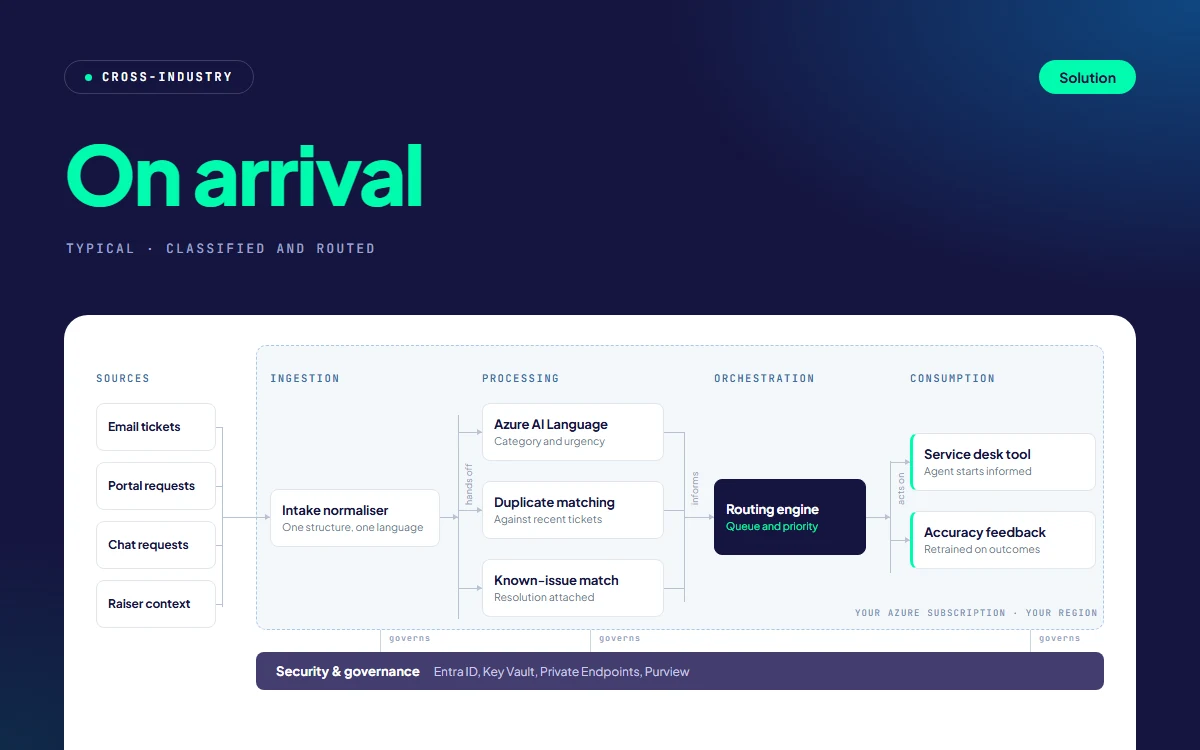
CloudGate classifies each ticket as it arrives — category, urgency, affected service and language — routes it to the queue that resolves that class, and recognises duplicates and known issues by matching against open and recent tickets. Where a documented resolution exists it is attached, so the agent starts from the answer. Routing accuracy is measured against actual resolution, and the model is retrained on it.
- Category, urgency, affected service and language detected on arrival
- Routed to the queue that actually resolves that class of ticket
- Duplicates and known issues matched against open and recent tickets
- Documented resolutions attached, so the agent starts from the answer
- Priority set against the service level the ticket is subject to
- Routing accuracy measured against resolution, and fed back into the model