Judicial Case and Judgment Drafting Copilot
Case files, proceedings and exhibits read and organised, relevant precedent retrieved, and a structured draft judgment prepared for the judge to reason from.
Typical outcomes for this kind of engagement. Results depend on your data and starting point.
A single matter arrives as hundreds of pages across charges, written addresses, exhibit lists, witness testimony and the record of proceedings, much of it scanned rather than searchable. Preparing a judgment means reading all of it, locating the statutes and precedent that apply, and assembling the reasoning by hand. The work is unavoidable, and it is the reason judgments take the time they do.
- Hundreds of pages per matter, much of it scanned and not searchable
- Testimony and cross-examination read in full to locate the material passages
- Precedent located from memory and manual search rather than from the record
- Citations formatted and cross-checked by hand
- Case material that must remain visible only to those assigned to it
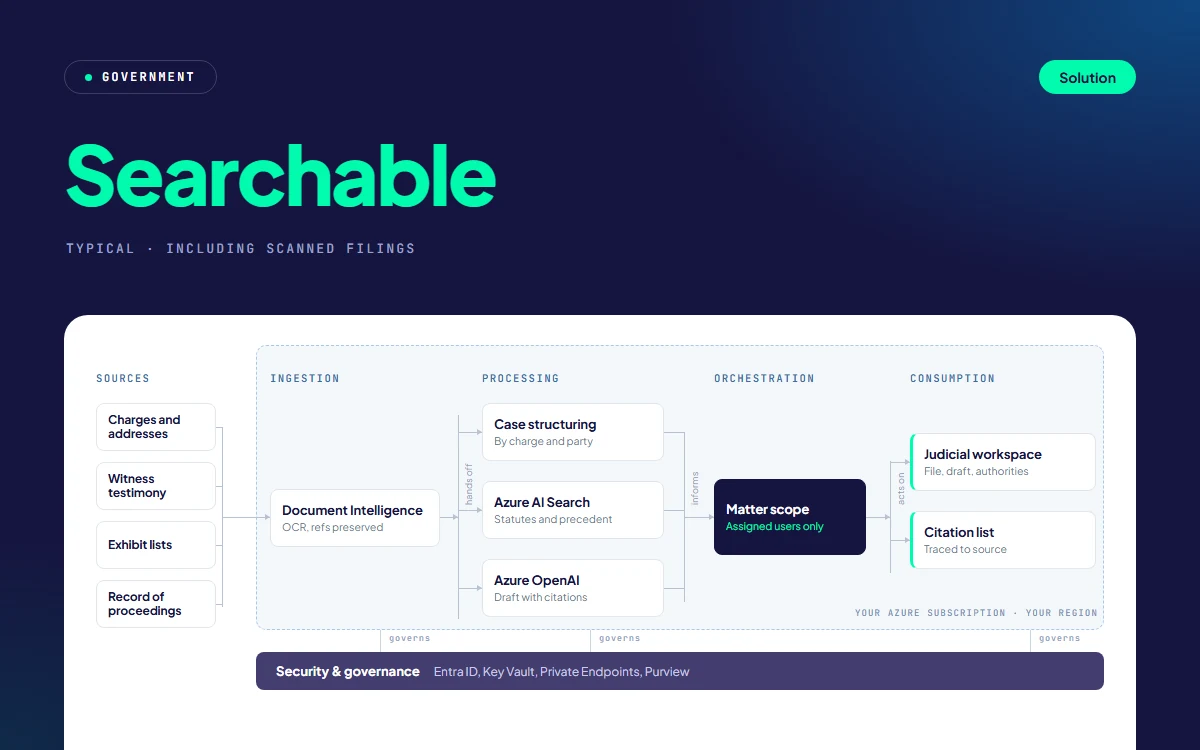
CloudGate makes the case file readable and searchable, including scanned material, and organises it by charge, party, exhibit and witness. Relevant statutes and prior decisions are retrieved and cited, and a structured draft is prepared covering the facts, the issues, the applicable law and the matters still to be resolved. The judge reasons and decides; the assembly is already done.
- Scanned filings made searchable, and the file organised by charge, party and exhibit
- Testimony and proceedings summarised with the source passage always reachable
- Statutes and prior decisions retrieved and cited against the issues raised
- A structured draft covering facts, issues, applicable law and open questions
- Citations formatted and cross-checked against the sources retrieved
- Role-based access, so a file is visible only to those assigned to the matter