Bid and Proposal Response Copilot
Reads the tender, maps every requirement to your approved content and past work, and drafts the response with the evidence attached to each answer.
Typical outcomes for this kind of engagement. Results depend on your data and starting point.
A tender arrives with several hundred requirements spread across documents and annexes, and a deadline measured in days. The first two of those days go on reading it and building a compliance matrix by hand. The answers already exist, in past submissions nobody can search, so they are rewritten from memory, and the reference chosen to support each one is whichever project the writer happened to remember.
- Requirements spread across documents and annexes, extracted by hand
- Past submissions that cannot be searched, so answers are rewritten from memory
- References picked from whoever remembers a relevant project
- No reliable view of which requirements are still unanswered
- Mandatory clauses missed, which disqualifies the bid outright
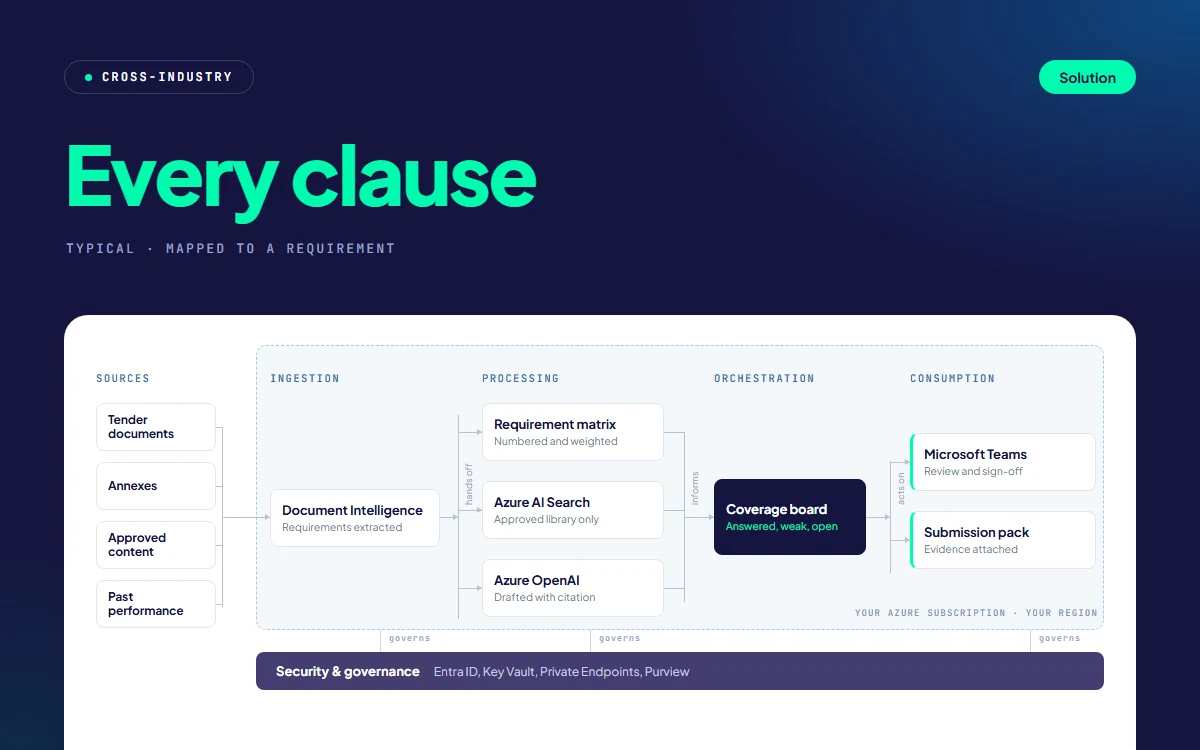
CloudGate parses the tender into a structured requirement list, retrieves the best matching approved content and past performance for each one, and drafts a response with the source named. Coverage is tracked against the matrix, so what is still unanswered is visible at any point, and nothing enters a draft that is not already in the approved library.
- The tender parsed into a structured, numbered requirement matrix
- Approved content and past performance retrieved per requirement
- Drafts produced with the source document named on every answer
- Live coverage tracking, so gaps in the response are visible throughout
- Mandatory and disqualifying clauses flagged before submission
- Nothing enters a draft that is not already in the approved library